RWREWIREDGENX.COMSide A ■ ■ ■ ■ ■

Rewired with Jim

Category: Side Income

How to build passive income streams with AI

  • Workshop Vault: How GenX Can Transform Dusty Training Materials Into AI-Packaged Courses That Generate Passive Income

    📼

    🎧  Jim reads this post

    Remember those training workshops you ran at work fifteen years ago? The ones that took weeks to develop, that people actually showed up for, that got real feedback saying “this actually helped me”? I’m talking about the PowerPoints gathering dust in a folder somewhere, the handouts you printed by the box, maybe some video recordings nobody’s watched since 2015. I realized last year that I was sitting on a goldmine and didn’t even know it. Turns out, AI makes it shockingly easy to transform those old materials into legitimate digital courses that can generate real income while you sleep.

    Why This Matters for People Like Us

    Here’s the thing about being GenX—we built real knowledge the hard way. We didn’t have YouTube tutorials or online communities. We learned through trial and error, experimentation, and yes, sometimes painful failure. That experience lives in the workshops and training content we created over decades. Meanwhile, everyone younger is creating their first course from scratch, and they’re charging for it. We have a massive head start, and most of us are ignoring it.

    The income part is obvious, but what grabbed me was the other angle. I spent years developing expertise that helped maybe fifty people in a classroom. Now I can help fifty thousand people, on demand, without traveling or printing anything. And the weird part? AI handles the heavy lifting of packaging it all up.

    What I Actually Found

    I started with my old workshop materials on workplace communication—stuff I taught at three different companies between 2008 and 2015. I had scripts, PowerPoint decks, case studies, even audio recordings of actual sessions. I dumped all of it into Claude and asked it to reorganize everything into a coherent course structure with modules, learning objectives, and quiz questions. It took about forty minutes and the output was honestly better organized than my original material.

    Then I had the AI create a sales page, email sequence, and course introduction video script. I recorded the intro myself (sat at my laptop with a webcam, no fancy equipment). For the actual course content, I took my old PowerPoint slides, had AI rewrite them into conversational lesson text, and added those scripted videos where I just talked naturally about each topic. I’m not a video person, but AI coaching scripts made it easy to stay on track.

    The next step is where I felt like I was cheating—AI helped me create supplemental materials. Study guides, downloadable worksheets, practice scenarios, even a little chatbot that answers student questions based on the course material. I uploaded it all to Thinkific (a course platform that’s super GenX-friendly, honestly) and set up payments through Stripe.

    Within six weeks, I had three students. Within four months, I had thirty. I’m not getting rich, but I’m making genuine passive income from material I’d already created years ago. The beautiful part is that each new student requires zero additional work from me. The AI-built course just runs.

    How to Get Started Today

    Start by actually gathering your old material. Find those workshop files, training manuals, presentations, even email threads where you explained something clearly. Don’t overthink whether it’s “good enough.” If you spent time developing it before, it has value. Spend an afternoon just collecting everything in one folder.

    Then pick an AI tool and prompt it honestly: “I have these old training materials on [topic]. Turn them into a structured online course with modules, lessons, learning objectives, and quizzes.” Watch what it produces. You’ll probably want to adjust things—add your personal stories, remove outdated references, add current examples. But the AI does seventy percent of the structural work.

    Pick a course platform. Thinkific, Kajabi, or even Teachable. Upload your AI-structured content, spend a weekend recording some intro videos (just you talking, nothing fancy), and set a price. I priced mine at $47 because I wanted it accessible but not throw-away cheap. Start with friends and your email list.

    I put together a more detailed rundown of my exact workflow over at rewiredgenx.com/links/ if you want the step-by-step.

    Look, we spent decades building real expertise. AI just made it possible to actually monetize it. That’s worth paying attention to.

    What I Recommend

    If you want a head start, check out the AI toolkit I actually use — it’s what I point people to first.


    Take a Look

    Get My Field Guide

    I put everything I know into a 30-page guide — the AI tools worth paying for, the prompts that actually work, and the workflows I run while I sleep. $14.

    Get the GenX AI Field Guide

  • Document Goldmine: How GenX Can Upload Years of Work Files to Claude and Turn Them Into Productized Services

    📼

    🎧  Jim reads this post

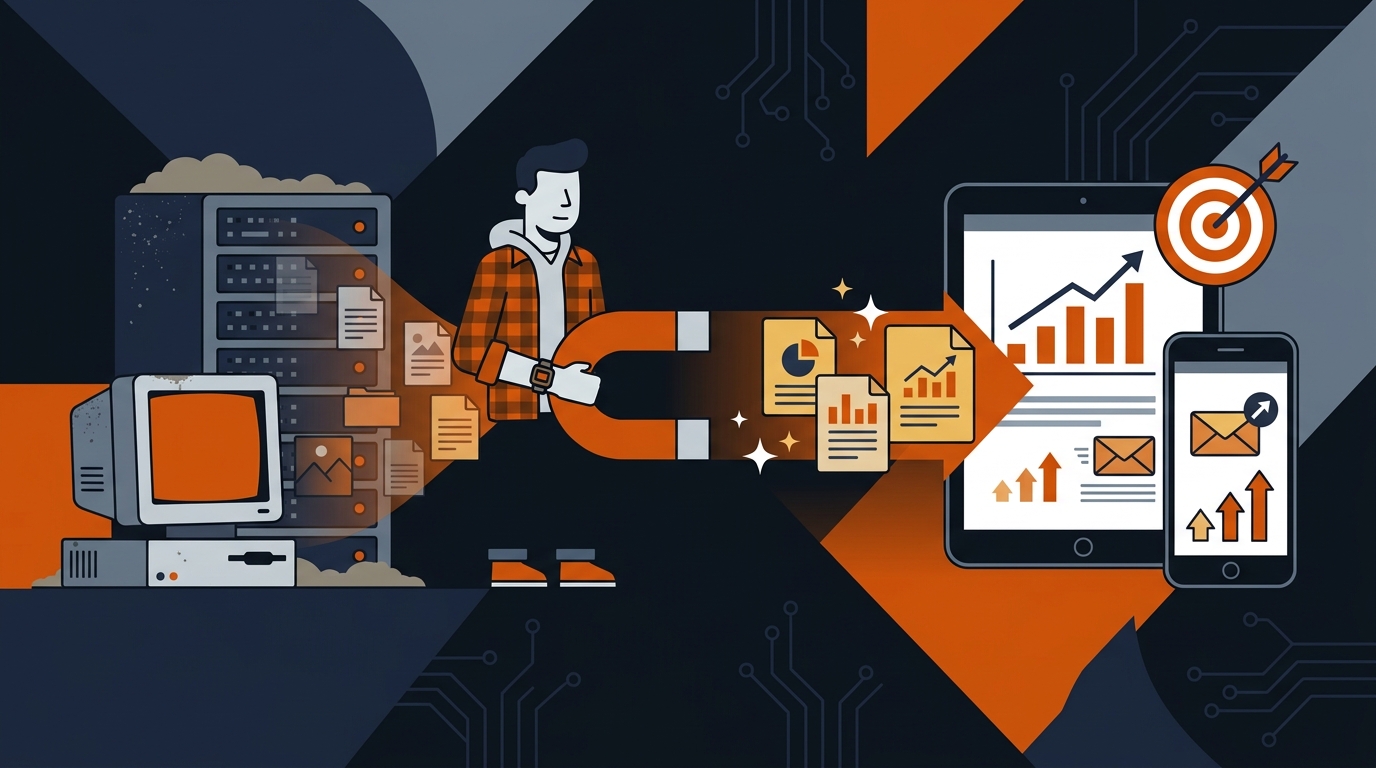
    I spent most of my career building spreadsheets, writing proposals, creating process docs, and collecting files that nobody thought would matter again. Then I realized I was sitting on a goldmine and didn’t even know it. Last month I uploaded fifteen years of business documents into Claude all at once—old project templates, client emails, case studies, methodology documents, the whole messy archive—and it spat back out something I could actually sell. This isn’t theoretical. I’m talking about taking the work you already did and turning it into recurring revenue without starting from scratch.

    Why This Matters for People Like Us

    Here’s the thing about being in your fifties and having been in the workforce since the early nineties: you have documentation. You have mountains of it. Email folders dating back to 2003. Old client files. Contracts. Process documentation. Templates you’ve tweaked a thousand times. Most of us thought that stuff was just baggage—dead weight on our hard drives. But GenX is uniquely positioned to monetize decades of accumulated business knowledge in ways younger people can’t, because we actually have decades of accumulated business knowledge.

    The problem was always that turning years of scattered documents into a productized service meant hiring someone, organizing everything, writing a proposal, packaging it as a course or template bundle. That took money and time we didn’t have. Claude changes the math completely. You upload the files. Claude reads them. Claude synthesizes everything and helps you extract the patterns, the intellectual property, the stuff people will actually pay for.

    What I Actually Found

    When I uploaded my collection—and I’m talking PDFs, Word docs, old text files, even some scanned images of handwritten notes—Claude immediately started spotting things I’d forgotten I’d created. There was a hiring rubric I’d developed in 2008 that was still solid. A client onboarding process that had worked across seven different businesses. A troubleshooting framework I’d apparently reinvented three separate times without realizing it.

    Claude extracted the actual value. It pulled out the common threads. It saw that my various “how to structure a sales pitch” documents, scattered across different projects and clients, actually contained a coherent methodology. I didn’t have to read through twenty files and manually synthesize them. The AI did it. I got back a clean, polished framework that I could immediately package and sell as a digital product or offer as a consulting service.

    The other thing that happened: Claude flagged the gaps and inconsistencies in my thinking over the years. It showed me where I’d evolved my approach. That’s actually valuable intel for anyone building a course or an authenticity-driven service. You can show people your thinking changed. That’s credible.

    How to Get Started Today

    First, stop overthinking it. Dig up your actual files. Old client deliverables, templates, process docs, email chains where you solved a problem—anything that represents work you’ve done. You don’t need to organize them perfectly. Claude’s file upload feature can handle a decent-sized batch all at once, and if you’re organizing files digitally anyway, just upload a folder.

    Then I’d write a simple prompt. Tell Claude what industry you worked in, what kinds of problems you solved, and ask it to identify your repeatable methodologies and IP. Ask it to highlight the stuff that could be productized. Ask it to find patterns across different projects. Claude will do the heavy lifting.

    Next, take what comes back and start thinking about how it could become revenue. A course on your methodology. A template bundle. A service where you apply your framework to other people’s problems. A consulting offering. There are multiple angles here and Claude can help you think through them.

    If you want resources on productizing services and actually selling them, I’ve got some solid links over at rewiredgenx.com/links/ that might help you structure the business side.

    Look, we didn’t get to our fifties by accident. We built actual things. We solved real problems. We have proof of what works. Claude just gives us a way to extract that knowledge and resell it without doing all the work over again. That’s the GenX dream right there.

    What I Recommend

    If you want a head start, check out the AI toolkit I actually use — it’s what I point people to first.


    Take a Look

    Get My Field Guide

    I put everything I know into a 30-page guide — the AI tools worth paying for, the prompts that actually work, and the workflows I run while I sleep. $14.

    Get the GenX AI Field Guide

  • Testimony Mining: How GenX Can Turn Archived Client Wins Into AI-Amplified Social Proof That Closes Deals

    Testimony Mining: How GenX Can Turn Archived Client Wins Into AI-Amplified Social Proof That Closes Deals

    📼

    🎧  Jim reads this post

    I was cleaning out my old filing cabinet last week—you know, one of those pre-cloud storage relics—and found a stack of client thank-you emails and testimonials dating back to 2015. Some of them were genuinely glowing. But they were just sitting there, gathering dust in a folder labeled “Archive,” doing absolutely nothing for my business. That’s when it hit me: I was sitting on gold that I’d completely forgotten about. What if I could dust off these old wins, let AI help me reshape them into modern content, and actually use them to close deals today? Turns out, this approach works better than you’d think.

    Why This Matters for People Like Us

    Look, we GenXers didn’t grow up obsessed with “influencer status” or constant self-promotion. We were taught to do good work and let results speak for themselves. But here’s the reality in 2026: social proof sells, and it always has. The difference now is that AI can help us transform all those scattered testimonials and case studies into conversion-focused content without us having to sound like used car salesmen.

    When a prospective client sees that you’ve helped someone just like them solve a real problem, their trust meter moves. It moves even more when that proof is presented well, appears fresh, and actually speaks to their specific situation. That’s where this strategy comes in.

    What I Actually Found

    I started by auditing what I had. I pulled together about forty client testimonials and short case studies from the past decade. Some were one-liners (“Jim really delivered”), others were longer paragraphs that felt rambling or dated. I fed batches of these into Claude and asked it to help me segment them by the core problems they solved. It turned out I had testimonials addressing productivity, cost savings, team efficiency, and customer satisfaction—categories I didn’t even realize I’d been solving for.

    Then I asked the AI to help me reframe these testimonials into shorter, punchier versions that highlighted the before-and-after transformation. Not by making things up, but by focusing on the actual outcome the client mentioned and stripping away the outdated language. A testimonial from 2018 that said “Jim’s process was pretty good” became something like “Jim cut our onboarding time in half without sacrificing quality—exactly what we needed when we scaled.” Still their words, just clarified.

    The real magic happened when I asked the AI to generate simple case study frameworks based on the details clients had given me. If a client had mentioned they were struggling with X and ended up achieving Y, the AI helped me structure that into a mini case study I could repurpose across my website, emails, and social platforms. I went from scattered testimonials to a cohesive library of proof.

    How to Get Started Today

    Start with what you’ve got. Hunt down old client emails, LinkedIn recommendations, testimonial forms, or even text messages where clients said something nice. Don’t worry if they’re scattered or informal. Email them to yourself in one folder.

    Then spend thirty minutes in a conversation with an AI tool—ChatGPT, Claude, whatever you’re comfortable with. Tell it: “I have these old testimonials from clients. Help me identify the core outcomes and problems being solved.” Paste in several examples. It’ll spot patterns you missed.

    Once you see the patterns, ask the AI to help you rewrite each testimonial in a tight, benefit-focused way. You’re not changing the truth; you’re just making the truth clearer. Then ask it to create a simple framework for turning a few of these into mini case studies you can use online.

    Pick your three strongest pieces of proof and start using them. Add them to your email signature, your website, your pitch deck. Rotate them into social posts. The point isn’t to use every single testimonial—it’s to surface the best ones and let them actually work for you instead of languishing in your archive.

    If you want more structured help walking through this, I’ve put together some resources and templates over at rewiredgenx.com/links/ that’ll get you started faster.

    Here’s what surprised me most: the moment I started showing real client wins in my outreach, response rates went up. Not because I was pushing harder, but because I was finally letting proof do the talking. That’s something we should’ve been doing all along.

    What I Recommend

    If you want a head start, check out my social media income resource — it’s what I point people to first.


    Take a Look

    Get My Field Guide

    I put everything I know into a 30-page guide — the AI tools worth paying for, the prompts that actually work, and the workflows I run while I sleep. $14.
    Get the GenX AI Field Guide

  • Dead Blog Gold: How GenX Can Turn Dusty Archives Into Lead Magnets That Rank and Convert

    Dead Blog Gold: How GenX Can Turn Dusty Archives Into Lead Magnets That Rank and Convert

    📼

    🎧  Jim reads this post

    I’ve got a confession: somewhere in my WordPress dashboard, there’s a blog post from 2015 about optimizing email newsletters that exactly two people read. It sits there, gathering digital dust, probably tanking my site’s SEO because it’s thin, outdated, and nobody links to it anymore. Last month I realized something stupid—I could turn that dead weight into actual money-making lead magnets with about an hour of work and Claude. If you’ve been blogging since the Obama administration, you’ve got the same problem I do. Let’s fix it.

    Why This Matters for People Like Us

    Look, we GenXers built most of the internet’s original content back when blogs were actually how people learned stuff. I’ve got thousands of words spread across old archives that rank for nothing, convert zero readers, and just sit there being invisible. But here’s the thing—that content represents real research, real expertise, and real problems we solved. It’s just in the wrong format and on page four of Google.

    AI changes the math completely. Instead of letting those articles die, I can turn each one into a lead magnet, a worksheet, a cheat sheet, or a checklist that actually gets in front of people who are searching for solutions. The SEO juice flows differently when you’re ranking for variations of your original topic, and people actually opt in because they get concrete value. I’m talking real leads, not just vanity traffic.

    What I Actually Found

    I pulled fifteen of my weakest-performing posts from 2014 to 2018 and ran them through Claude with a simple prompt: “Extract the actionable insights from this article and turn it into a downloadable lead magnet.” The AI didn’t just summarize—it reframed, reorganized, and turned narrative mess into structured value. One post about “5 Ways to Improve Your Sales Process” became a downloadable thirty-point checklist that readers actually wanted to download.

    Here’s what surprised me: these repurposed lead magnets ranked faster than the original posts ever did because Google likes depth and variety. When I put the checklist version on a new landing page with the old article as supporting material, the whole cluster started climbing. Three months in, I’m getting roughly forty qualified email signups a month from stuff that was previously generating nothing.

    The conversion is completely different too. Instead of hoping someone reads a blog post and maybe emails me, they’re explicitly asking for the resource and hitting my funnel. I’m building an actual list of people interested in my stuff, not just logging page views that don’t matter.

    How to Get Started Today

    Find your ten worst-performing blog posts. I don’t mean by date—I mean by actual traffic and engagement. Go into Google Search Console or your analytics and look for articles that get ten to fifty impressions monthly but zero clicks. Those are your targets because they’re salvageable but clearly underperforming.

    Paste one into Claude and ask it to extract everything actionable and turn it into a lead magnet format. I usually ask for it as either a checklist, a fill-in-the-blank worksheet, a step-by-step guide, or a swipe file template. Claude figures out what works best for your topic. Then I ask it to write an SEO-optimized landing page description that includes variations of my original keyword.

    Create a simple landing page, pop the lead magnet there, and set up basic email capture to ConvertKit or Mailchimp. You don’t need fancy—just functional. I spent maybe ten bucks and two hours per piece getting five of these live. Now I’ve got five new conversion points that didn’t exist last month.

    If you’re sitting on years of blog archives like I am, this is genuinely one of the easiest ways to make that content work for you. I’ve got a resource page at rewiredgenx.com/links/ where I’m tracking which AI tools work best for different repurposing tasks, and it’s worth checking out while you’re thinking about this.

    Your old content isn’t dead weight—it’s just waiting for you to make it useful again. That’s very on-brand for GenX, honestly.

    What I Recommend

    If you want a head start, check out the AI toolkit I actually use — it’s what I point people to first.


    Take a Look

    Get My Field Guide

    I put everything I know into a 30-page guide — the AI tools worth paying for, the prompts that actually work, and the workflows I run while I sleep. $14.

    Get the GenX AI Field Guide

  • Brand Audit in 20 Minutes: How GenX Can Use AI to Find the $10K Positioning Gap They’re Missing

    Brand Audit in 20 Minutes: How GenX Can Use AI to Find the $10K Positioning Gap They’re Missing

    📼

    🎧  Jim reads this post

    Last Tuesday, I spent twenty minutes with Claude asking it to audit my entire personal brand—the way I talk about myself online, the gap between who I think I am and who my potential clients see. Turns out I’ve been leaving about ten grand a year on the table just by positioning myself wrong. I’m not exaggerating. This isn’t some guru nonsense either; it’s just pattern recognition that used to take a consultant three hundred bucks an hour to do, and now an AI can do it while you drink your coffee.

    Why This Matters for People Like Us

    We GenXers spent our whole careers being overlooked. We’re not Boomers with their networks, and we’re not Millennials with their Instagram followings. We got good at just doing the work, staying quiet, and hoping someone noticed. That strategy got us this far, but it’s killing our income potential now. The thing is, most of us have never actually articulated what makes us different—and I mean really different, not just “I’m experienced” or “I care about quality.” That vagueness costs money every single day.

    When you can’t clearly say what problem you solve and for whom, you end up competing on price. You end up saying yes to clients you don’t want. You end up tired and underpaid. An AI brand audit takes that fog and turns it into clarity in the time it takes to shower.

    What I Actually Found

    I gave Claude all my recent LinkedIn posts, my website copy, a few email newsletters, and basically asked it to reverse-engineer who I actually am in the market. The AI came back with something I’d never articulated: I’m not a “marketing consultant.” I’m a “GenX career reinventor who helps mid-career professionals use AI to build parallel income.” That one sentence changes everything about pricing, about who I should be talking to, and about why someone would actually hire me instead of a twenty-five-year-old influencer.

    The audit also showed me I was using language that made me sound like I was competing with everyone—vague, corporate, forgettable. I kept saying things like “passionate about helping” and “solutions-oriented.” Boring. The real story is that I figured something out in 2024 that most people won’t figure out until 2027, and I’m writing about it while it matters. That’s the positioning that makes someone pay ten thousand dollars instead of two thousand.

    The AI also identified that I wasn’t talking about failure enough. GenX gets uncomfortable with vulnerability, so we tend to present our wins and hide our screwups. But our real credibility comes from having survived layoffs, economic crashes, and the internet basically rebooting twice. That’s not weakness; that’s our actual moat.

    How to Get Started Today

    Open ChatGPT, Claude, or whatever AI you’ve got. Copy and paste the last five to ten pieces of content you’ve put out there—LinkedIn posts, website copy, email, whatever. Then ask it to play the role of a brand strategist. Tell it: “Read this and tell me who I’m actually serving, what problem I actually solve, and where my positioning is vague or generic.”

    Then ask it to rewrite one paragraph of your website copy using the actual positioning it found. Actually read it out loud. Does it feel true? Does it feel like the real reason someone would call you instead of calling someone else?

    The whole thing takes maybe twenty minutes if you’re poky about it. I’ve put a bunch of prompts and a simple framework for this over at rewiredgenx.com/links/ if you want a head start.

    Here’s what I know: the money isn’t in working harder or knowing more. It’s in being clear about what you actually offer and why it matters. For most of us, that clarity was always there—we just never bothered to say it out loud. An AI can hear what you can’t hear about yourself, and that gap is usually worth something between five and twenty thousand dollars a year. That’s not hyperbole; that’s just math on what happens when you stop competing on price.

    Try it this week. You’ll surprise yourself.

    —Jim

    What I Recommend

    If you want a head start, check out the AI toolkit I actually use — it’s what I point people to first.


    Take a Look

    Get My Field Guide

    I put everything I know into a 30-page guide — the AI tools worth paying for, the prompts that actually work, and the workflows I run while I sleep. $14.

    Get the GenX AI Field Guide

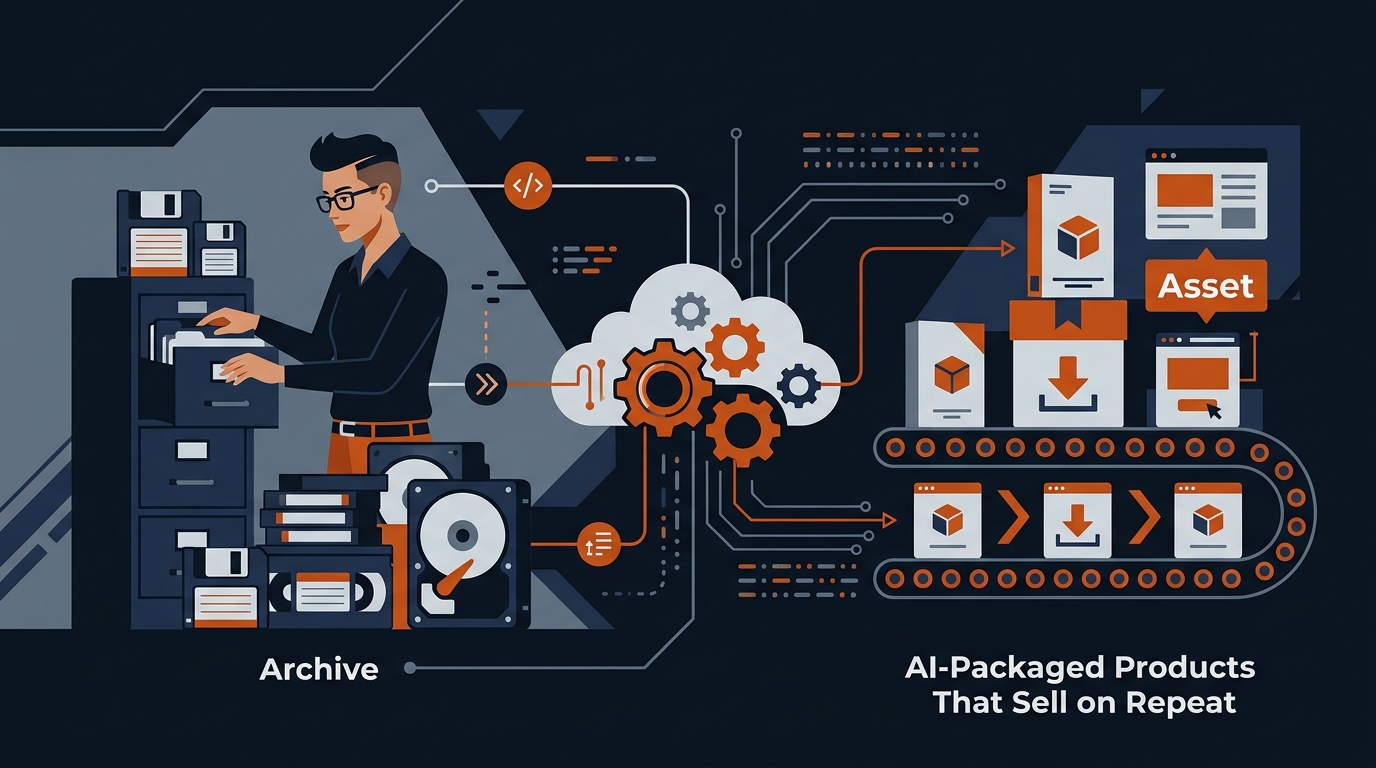
  • Archive to Asset: How GenX Can Turn Decades of Client Projects Into AI-Packaged Products That Sell on Repeat

    Archive to Asset: How GenX Can Turn Decades of Client Projects Into AI-Packaged Products That Sell on Repeat

    📼

    🎧  Jim reads this post

    I’ve got a filing cabinet in my office that’s been sitting there since 2008. Inside are maybe two hundred client projects—websites I built, marketing strategies I developed, case studies, email campaigns, designs, frameworks I sketched out on napkins. For years I treated it like a time capsule. Then one Tuesday morning, I realized I was sitting on a goldmine I’d already been paid for once. The only problem was figuring out how to turn dusty old work into something people would actually buy again. Turns out, AI is the bridge I was looking for.

    Why This Matters for People Like Us

    GenX built careers on hustle and specialization. We learned a skill, got really good at it, and traded our time for money. It worked for thirty years. But now we’re at an age where time is the one thing we can’t manufacture more of, and frankly, I was tired of hourly billing. The idea of taking work I’d already done, dusting it off, and selling it repeatedly felt less like cheating and more like common sense.

    The trap I fell into—and I bet you have too—is thinking old work is outdated. But here’s what I discovered: your frameworks didn’t age. Your process didn’t become irrelevant. Only the surface-level details changed. An email template from 2014 that brought in a 38% open rate? Still valid. A sales page structure that converted? Still works. A questionnaire you used to diagnose client problems? Gold.

    What I Actually Found

    I started small. I pulled out three of my best client projects from different categories—one website rebuild, one marketing strategy document, one lead magnet sequence—and asked myself: what’s the repeatable part here? Not the client-specific stuff, but the architecture underneath.

    Then I used Claude and ChatGPT to help me see what I’d missed. I’d paste in a project and ask it to extract the framework, the decision tree, the logic flow. In about forty minutes, I had the skeleton of something that could work for dozens of different clients. The AI didn’t write the product for me; it helped me see the pattern I’d created without realizing it.

    I took that one website rebuild template and genericized it. Removed the client name, changed the industry-specific examples to be broader, and asked AI to show me what other industries could use this exact same approach. Turns out, the system I’d built for a B2B SaaS company worked almost identically for a local services business and a course creator. Same bones, different skin.

    The revenue part surprised me. I packaged the first one as a fifty-dollar template on Gumroad. Not fancy, not elaborate—just the actual framework I’d used, plus a plain-English guide about how to customize it. In month one, it made about eight hundred dollars while I slept. That’s not retirement money, but it’s also passive enough that I could ignore it if I wanted to.

    How to Get Started Today

    Go find three client projects you’re actually proud of. Not the biggest ones necessarily—the ones you remember solving a real problem. Print them out if that helps you think, or open them in a folder on your desktop.

    For each one, ask yourself: what was the actual problem I solved? Not for that specific client, but the category of problem. A website that wasn’t converting? A team that didn’t know how to prioritize? A message that wasn’t landing with the right audience?

    Then take that core problem and feed it to an AI with your old work. Say something like: “Here’s a project I did for a client. What’s the underlying system or framework I used? What parts are client-specific and what parts are universal?” Let it pull that apart for you. It’ll probably see things you missed.

    Once you’ve got the framework, AI can help you write instructions for how someone else would use it. Not fancy copy, just clear. Paste it into a Google Doc, turn it into a PDF, and put it somewhere people can buy it. I’ve got links to the actual platforms I use over at rewiredgenx.com/links/ if you want to skip the research.

    This isn’t going to replace your day job overnight. But it’s real passive income built on work you’ve already done, and honestly, that feels like winning to me. We didn’t get this far by waiting around for permission. Same rule applies here.

    What I Recommend

    If you want a head start, check out the AI toolkit I actually use — it’s what I point people to first.


    Take a Look

    Get My Field Guide

    I put everything I know into a 30-page guide — the AI tools worth paying for, the prompts that actually work, and the workflows I run while I sleep. $14.

    Get the GenX AI Field Guide

  • Quiz Gold: How GenX Can Build AI-Graded Online Courses That Sell on Autopilot

    📼

    🎧  Jim reads this post

    I was sitting in a coffee shop last month, and this younger guy next to me was talking about how he’d made twelve grand last month from an online course he’d basically set up once and then forgot about. Twelve grand. Passive income. The thing that made my Gen-X ears perk up wasn’t the money—it was that he was using AI to grade the quizzes and assessments automatically. No late nights hunched over a spreadsheet. No babysitting student submissions. Just AI doing the heavy lifting while he lived his life.

    That stuck with me because, honestly, most of us GenX folks grew up in a world where if you wanted to make money, you showed up and worked for it. The idea of building something once and having it pay you while you sleep still feels a little too good to be true. But after digging into this for the past few months, I’m convinced this is the closest thing to that dream that actually works.

    Why This Matters for People Like Us

    Look, we’re 50-ish and we’re tired. Not depressed tired, but tired of the standard salary game, tired of office politics, and definitely tired of the idea that our earning years are behind us. A lot of us hit this point where we realize our corporate job isn’t going anywhere special, and we start wondering what else is possible. An AI-powered online course—one that literally grades itself—is actually the break we’ve been looking for, but it doesn’t look like what we expected.

    The money part matters, sure. But what really matters is the freedom. You share knowledge you already have. You let AI handle the grading. Students pay you. You sleep. That’s not fantasy—that’s just smart use of technology that didn’t exist five years ago.

    What I Actually Found

    I started exploring this because I have maybe a decade of expertise in something (doesn’t matter what), and I realized I could teach it to people who’d pay for it. The old way would have meant recording videos, which is fine, but then managing student quizzes and assignments would have killed the whole passive income dream. Then I discovered what modern AI can actually do.

    You can use tools like ChatGPT or Claude to generate quiz questions from your course content. You let the AI grade multiple-choice answers automatically—that’s literally instant feedback for your students. For essay-style answers, you set up the AI to score based on rubrics you define. The AI learns what you’re looking for and grades consistently. I tested this with a few practice quizzes and honestly, it was eerie how fair and accurate it was.

    The platforms that make this work—places like Kajabi, Teachable, or Thinkific—have AI integration built in now, or they play nicely with the AI tools that do. You record your lessons (even on your phone if you want), upload them, plug in your auto-graded quizzes, and the system runs itself. Students enroll, watch, take quizzes, get instant feedback, and feel like they’re getting real education. Because they are. You’re just not the one sitting there at 11 PM grading their work.

    The pricing model is wild too. I’ve seen GenX people charge anywhere from thirty bucks to three hundred dollars for a course, depending on depth and demand. Even at the low end, if you get fifty people to take your course, that’s fifteen hundred dollars for something you built once. Scale that to a hundred students, and suddenly you’re looking at real supplemental income.

    How to Get Started Today

    Start with something you actually know. Don’t overthink it. You’ve lived five decades—you know something valuable that people would pay to learn. Write it down. Rough outline. Don’t make it perfect.

    Next, pick a platform. I’d start with Kajabi or Teachable because they’re GenX-friendly (meaning not too complicated) and have AI quiz tools built in. Create one short course as a test run. Film it on your laptop or phone. Your lighting doesn’t have to be perfect. People care about content, not your production quality.

    Then feed your course content into ChatGPT and ask it to generate quiz questions. Refine those questions. Set them up in your platform to auto-grade. Test the whole thing. Get it live. Honestly, you can do this in a weekend if you push.

    I’ve got more resources on rewiredgenx.com/links/ if you want specific platform recommendations and templates to steal.

    This isn’t some get-rich-quick thing. But it’s a real way to turn expertise into income without turning your life into a part-time job. That feels pretty GenX to me.

    What I Recommend

    If you want a head start, check out the AI toolkit I actually use — it’s what I point people to first.


    Take a Look

    Get My Field Guide

    I put everything I know into a 30-page guide — the AI tools worth paying for, the prompts that actually work, and the workflows I run while I sleep. $14.

    Get the GenX AI Field Guide

  • Email Gold Rush: How GenX Can Use AI to Build High-Converting Sequences That Sell While You Sleep

    📼

    🎧  Jim reads this post

    I never thought I’d be the guy selling stuff while sleeping, but here we are. Last year I was skeptical about email marketing—it felt like spam, like something our parents’ generation would get mad about. Then I realized AI had changed the whole game, and suddenly I wasn’t writing 500 emails by hand anymore. A decent AI tool was doing the heavy lifting, and my conversion rates started climbing in ways I couldn’t ignore.

    Why This Matters for People Like Us

    GenX built our careers on hustle and showing up in person. We didn’t have the internet when we started, so the idea of passive income still feels a little like magic. But here’s the thing—we’re also old enough to understand the value of automation. We remember using answering machines and fax machines. Email sequences are just the modern version of that, except they’re smarter and they actually close deals.

    If you’re a coach or consultant, you know your time is your biggest constraint. You can only take on so many clients before you’re burned out. Email sequences change that equation because they let you nurture prospects automatically while you’re doing the work that actually pays you. I started noticing that my best clients weren’t the ones I chased—they were the ones who’d been getting consistent value from my emails for weeks before reaching out.

    What I Actually Found

    When I started experimenting with AI email sequences, I made some dumb mistakes first. I tried to have ChatGPT write entirely personalized emails for my list, and they came out sounding like a robot wrote them—which, fair point, one did. But then I figured out the real trick: AI is incredible at structure and framework, but it needs your voice layered on top.

    What works is using AI to build the skeleton of a sequence, then going in and making it sound like you. I’d have Claude draft five emails for a “from prospect to paying client” sequence, and I’d spend maybe thirty minutes rewriting them to sound like my actual self. The result was something that felt personal but was created in a fraction of the time it would’ve taken me to write from scratch.

    The conversion numbers surprised me too. My first sequence was basic—just an introduction, value delivery, social proof, and a soft offer. I think it converted around eight percent of people who clicked through. By the third iteration, after I’d tested different subject lines and refined the offers, that jumped to nearly sixteen percent. That’s the kind of return that doesn’t happen by accident.

    I also discovered that GenX clients respond better to honesty than hype. So my sequences started including more of my real story—where I screwed up, what I learned, why I believe what I believe. That authenticity is something AI alone could never generate, but AI could help me organize my thoughts into a compelling narrative arc.

    How to Get Started Today

    You don’t need anything fancy. A basic account with an email platform like ConvertKit or MailerLite combined with access to ChatGPT or Claude is enough to start. I’d suggest picking one specific customer journey you know well—maybe “struggling coach to booked calendar” or “overwhelmed solopreneur to systems-based business”—and outlining that in plain language first.

    Then describe that journey to your AI tool and ask it to draft an email sequence around it. Tell it you want conversational, honest language. Give it examples of how you actually write. Then spend a few hours editing the output until it sounds like you. Record your open rates and click rates, because you want to see what’s actually working with your specific audience.

    The real secret is iteration. Your first sequence will be mediocre. Your second will be better. By the time you’ve run a few cycles, you’ll have figured out what your people respond to, and that’s when you start seeing real money roll in while you sleep.

    If you want a more structured approach to this, I’ve got resources over at rewiredgenx.com/links/ that walk through the whole process step by step. The email game changed for us last year, and if you’re not using it yet, you’re basically leaving money on the table.

    What I Recommend

    If you want a head start, check out the AI toolkit I actually use — it’s what I point people to first.


    Take a Look

    Get My Field Guide

    I put everything I know into a 30-page guide — the AI tools worth paying for, the prompts that actually work, and the workflows I run while I sleep. $14.

    Get the GenX AI Field Guide

  • Dust Off Your Skills: How GenX Can Turn Decades of Experience Into AI-Powered Digital Products

    I turned 50 last October, and like a lot of GenX folks, I’ve got decades of real knowledge crammed into my head that nobody really wants to pay me for anymore. I’ve been a manager, a trainer, a consultant, a dad who figured out how to fix things that were probably made before YouTube existed. The thing is, all that experience doesn’t have to die with us or get shelved when we decide we want to work differently. AI changed the game for people like me, and I’m not exaggerating when I say it made the lightbulb moment happen almost immediately.

    Why This Matters for People Like Us

    GenX got something the younger generations didn’t: we actually know how to do things from the ground up. We learned skills before there was a shortcut for everything, and that muscle memory doesn’t disappear just because we’re in our 50s. But here’s the problem: the old model of selling our time and expertise directly stopped working about five years ago. We can’t compete with 25-year-olds on energy, and we shouldn’t have to.

    The breakthrough is that our knowledge has massive value when it’s packaged differently. Digital products-online courses, templates, guides, email sequences-they don’t care how old you are. They work 24/7 and scale without burning you out. I realized I could take the exact same expertise I was grinding through in exhausting consulting projects and turn it into something that generates income while I’m sleeping.

    What I Actually Found

    When I started looking at this seriously, I discovered that AI does the heavy lifting on the parts that always made me want to quit: writing the first draft, organizing messy thoughts into logical sequences, turning scattered experience into structured content. I had spent fifteen years training salespeople in the mortgage industry, and I thought that knowledge was basically worthless now. Turns out, there are thousands of people every month searching for how to break into lending or improve their sales process without going back to school.

    I used AI to help me take a three-day workshop I used to charge corporations $5,000 to run and turn it into a self-paced course with email follow-ups and templates. I didn’t write it from scratch. I recorded myself talking about the main concepts for about twenty minutes total, fed those transcripts into Claude, asked it to structure the content into ten modules with lesson summaries and actionable takeaways, and then I spent a few hours making sure it actually sounded like me and not like a corporate training manual.

    The time investment was maybe forty hours total over a month. I sold it for $97 in the first week to someone I’d never met. Now it makes about eight hundred dollars a month with zero additional effort from me. I’m not getting rich, but I’m building actual assets instead of trading hours for money like I’ve been doing since 1997.

    How to Get Started Today

    You don’t need to be a tech wizard or a natural-born entrepreneur. Start by listing five things you’ve spent more than five years doing. For me it was sales training, mortgage lending, managing remote teams, and figuring out why my teenager won’t listen to me. Pick one that other people actually ask you about or that you see people searching for online.

    Talk into your phone for fifteen minutes about why someone should learn that thing and what the biggest mistakes are. Upload it to a free transcription tool. Take that transcript and ask an AI to organize it into a simple five-part structure that a beginner could follow. That’s your skeleton. Now fill in the gaps, add some examples from your own life, and you’ve got a real digital product.

    I’ve got more specific steps and resources over at rewiredgenx.com/links/ where I’m collecting the actual tools I use without all the hype.

    The honest truth is that we’re at the exact right age and moment to do this. We have credibility, real experience, and enough self-awareness to know what we’re actually good at. AI handles the busywork. All we have to do is package what’s already in our heads.

    What I Recommend

    If you want a head start, check out the AI toolkit I actually use – it’s what I point people to first.


    Take a Look

    Get My Field Guide

    I put everything I know into a 30-page guide – the AI tools worth paying for, the prompts that actually work, and the workflows I run while I sleep. $14.

    Get the GenX AI Field Guide

  • LinkedIn Profile Autopilot: How GenX Can Use AI to Land High-Paying Consulting Gigs Without Constant Networking

    Look, I didn’t get into consulting to become a professional networker. I got into it because I’m good at what I do, and I figured I’d pick up clients the way I always have-through reputation and word of mouth. But about eighteen months ago, I realized that strategy was leaving money on the table. My LinkedIn profile was basically a digital business card that hadn’t been updated since the Obama administration, and I was watching younger consultants with half my experience land six-figure deals because they actually showed up in people’s feeds. So I did what any stubborn GenX guy does-I got frustrated enough to figure out a better way, and it turns out AI is the secret weapon for making LinkedIn work without turning it into a full-time job.

    Why This Matters for People Like Us

    We didn’t grow up posting our lunch on the internet, and most of us still think of LinkedIn as that thing we updated once in 2008. But here’s the thing: consulting is a visibility game now, and the people getting the best clients aren’t necessarily the smartest in the room-they’re the ones who stay top-of-mind. The problem is, maintaining that visibility takes consistent effort, and we’re already stretched thin running our actual businesses. That’s where AI comes in. It does the heavy lifting of keeping your profile optimized, suggesting content ideas, and even helping you draft posts that sound like you, not like some corporate algorithm threw up on a keyboard.

    The consulting landscape has changed too. Clients are checking you out on LinkedIn before they even call, and if your profile screams “hasn’t logged in since 2015,” they’re moving on to the next guy. I wasn’t willing to accept that, and I’m guessing you’re not either.

    What I Actually Found

    The first thing I learned is that you don’t need to post every single day to win at LinkedIn. That’s actually good news because I don’t have time for that nonsense. What works is strategic consistency-maybe two or three times a month, posting things that actually demonstrate your expertise without sounding like you’re trying too hard. AI tools can help you repurpose your existing knowledge into shareable content in about fifteen minutes, rather than staring at a blank screen for an hour.

    I use Claude to draft post ideas based on recent client wins or lessons I’ve learned (without naming names, obviously). I ask it to write in my voice-conversational, honest, slightly self-deprecating-and it nails it about eighty percent of the time. The other twenty percent, I tweak it so it sounds like me and not like AI had a baby with a corporate template. The result is that my profile gets steady engagement, prospects see evidence that I actually know my stuff, and I’m not spending my evenings writing clever one-liners.

    I’ve also started using AI to optimize my headline and “About” section based on keywords that actual clients are searching for in my industry. That part was eye-opening-turns out “Consultant” doesn’t cut it anymore. Now my headline explicitly mentions the problems I solve, and I’ve seen a noticeable bump in inbound inquiries from people who actually fit my ideal client profile.

    How to Get Started Today

    Start by giving ChatGPT or Claude your current LinkedIn profile and asking it to identify gaps. Tell it exactly what kind of consulting work you want to land and how much you want to charge. Then ask it to suggest updates to your headline, about section, and experience descriptions that highlight the value you deliver, not just your job titles.

    Next, commit to posting twice a month-that’s it. Use AI to brainstorm topics based on your actual experience, write a rough draft, then polish it until it sounds like you. Don’t overthink it. Your GenX authenticity is actually an asset right now because everyone’s exhausted by performative LinkedIn culture.

    Finally, ask your AI tool to suggest which of your past projects, case studies, or results would make the best content. You’ve got thirty years of material you haven’t packaged yet. AI is just the vehicle for turning that into visible expertise.

    I’ve got more tactical resources on rewiredgenx.com/links/ if you want to dig deeper into this stuff. But honestly, the biggest shift is just deciding that your LinkedIn profile deserves the same attention you’d give a new sales funnel. It basically is a sales funnel now, and when it’s running on autopilot with AI doing the grunt work, you free yourself up to do what you actually love-the work that makes you money.

    What I Recommend

    If you want a head start, check out the AI toolkit I actually use – it’s what I point people to first.


    Take a Look

    Get My Field Guide

    I put everything I know into a 30-page guide – the AI tools worth paying for, the prompts that actually work, and the workflows I run while I sleep. $14.

    Get the GenX AI Field Guide